You’ve probably heard the hype that retinol is the it girl for anti-aging. It smooths wrinkles, fades dark spots, reduces acne, and also gives your skin that tight, youthful glow. Sounds perfect, right?
But here’s something no one tells you…
Retinol only works like magic when you use it correctly. Otherwise, it can leave your skin irritated, red, flaky, and frustrated. If you’ve ever tried retinol and thought “This is making my skin worse!” ,you’re not alone. Most people make the exact same mistakes in the first few weeks.
At Muggu Skincare, we believe retinol doesn’t have to be scary. With the right routine and a few smart tips, anyone can enjoy smoother, clearer, younger-looking skin without the irritation.
This guide will show you the most common retinol mistakes to avoid and exactly how to fix them so your skin stays happy and glowing.
What Exactly Does Retinol Do?
Retinol is a Vitamin A derivative and the most well-researched anti-aging ingredient in skincare.
Here’s how it transforms your skin:
-
Boosts collagen → reduces fine lines & wrinkles
-
Sped up cell turnover → smoother texture, fewer pores
-
Fades pigmentation → acne marks, sun damage, uneven tone
-
Controls oil & breakouts → clears pores from inside out
It works deeply within the skin, not just on the surface, which is why dermatologists SWEAR by it.
But because it is so powerful, using it wrongly can cause “retinol burn”… a nightmare situation of peeling, redness, and irritation.
Let’s make sure that never happens to you.
The 5 Biggest Retinol Mistakes And How to Avoid Them!
Mistake 1: Starting with Too Much, Too Fast
Retinol is powerful, and applying it daily from the very first day can overwhelm your skin — leading to redness, excessive dryness, flaking, and a burning sensation. Instead, you need to retinise your skin: allow it to slowly build tolerance.
Start by using retinol 1–2 nights a week for the first two weeks, increase to alternate nights in weeks 3–4, and only move to daily use after week 5 if your skin feels comfortable. Remember: Retinol isn’t a race — go slow to glow fast.
Mistake 2: Skipping Moisturiser
Retinol can weaken the skin barrier when you first start, and if you apply it on dry, unprotected skin, irritation kicks in faster and fine lines may even look more noticeable (the opposite of your goal!).
The fix is simple: always pair retinol with a barrier-boosting moisturiser. Try the Retinol Sandwich Method — moisturiser, then retinol, then moisturiser again — to cushion your skin and reduce sensitivity. Look for soothing, hydrating ingredients like ceramides, hyaluronic acid, panthenol (B5), and squalane. Hydrated skin = happy retinol results.
Mistake 3: Not Wearing Sunscreen Daily
This is the biggest deal-breaker! Retinol makes your skin more sensitive to UV rays, and stepping out without sunscreen can lead to more pigmentation, darker spots, faster aging, and poor results overall, basically, one sunny day can undo weeks of progress.
The rule is non-negotiable: apply SPF 30+ every morning, reapply if you’re outdoors for long, and pick a lightweight gel or fluid formula that suits Indian weather. Want younger, clearer skin with retinol? SPF is half the job.
Mistake 4: Mixing Retinol With Harsh Actives
Retinol is already exfoliating your skin from within, adding strong acids or harsh actives on top is like overworking your skin, leading to irritation and inflammation. Avoid using retinol at the same time as AHA/BHA exfoliants (such as glycolic, lactic, or salicylic acid), benzoyl peroxide, vitamin C (apply that in the morning instead!), or physical scrubs.
A smarter approach is skin cycling: Night 1 for retinol, Night 2 for moisturising and barrier repair, Night 3 for exfoliation if needed, and Night 4 for hydration, then repeat.
Mistake 5: Expecting Instant Results (and Giving Up Too Soon)
Retinol isn’t a quick fix, because it’s working deep inside the skin to rebuild and repair. During the first 1–3 weeks, you may experience mild dryness or purging, that’s the adjustment phase. In weeks 4–8, skin becomes smoother with fewer breakouts, the improvement phase.
By weeks 8–12, you reach the transformation stage: more glow, improved firmness, and fading marks. And over 3–6 months, retinol hits its anti-aging peak , softer wrinkles and refined pores. If you quit during the adjustment phase, you never get to the transformation. Treat retinol like a long-term habit, not a short-term fix.
The Muggu Way: Younger Skin Made Easy
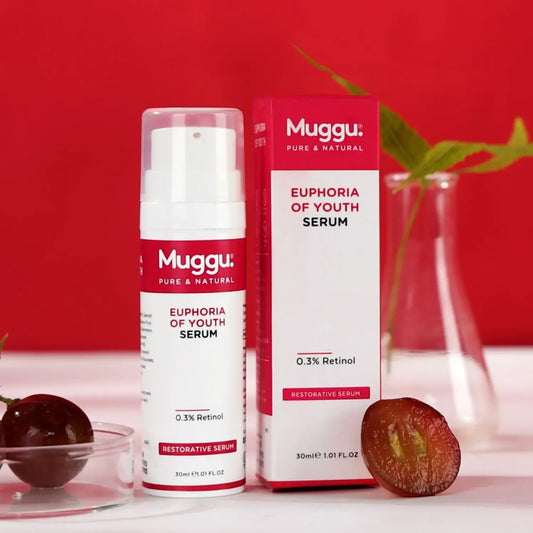
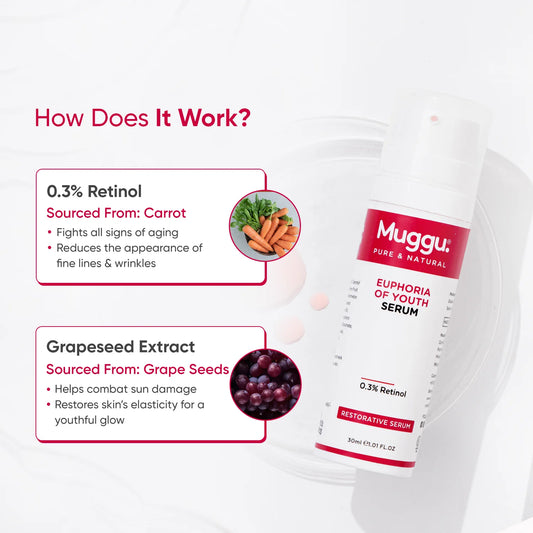
Our Muggu Advanced Retinol Serum is crafted for maximum results with minimum irritation.
✔ Beginner-friendly % retinol — scientifically balanced
✔ Includes soothing ingredients (like Hyaluronic Acid + Ceramides)
✔ Reduces acne & wrinkles together
✔ Light, non-sticky texture
✔ Suitable for Indian humid weather
✔ Works even on sensitive skin with a slow-introduction plan
When Should You See a Dermatologist?
-
If irritation continues after 4–6 weeks
-
If you have eczema, rosacea, or severe acne
-
If your skin barrier feels constantly damaged
Doctors can help adjust strength or frequency based on your skin’s needs.
Quick Summary: Dos & Don’ts
|
Retinol Rules
|
Do
|
Don’t
|
|
Frequency
|
Start 2× a week
|
Apply daily from day one
|
|
Application
|
On dry skin
|
On damp skin
|
|
Pairing
|
With moisturiser & SPF
|
With acids/Vitamin C at night
|
|
Amount
|
Pea size
|
A thick layer
|
|
Patience
|
Wait 8–12 weeks
|
Expect instant results
|
Final Thoughts
Retinol is one of the best anti-aging ingredients in skincare, but success depends on using it correctly. Avoid the common mistakes, stay consistent with a smart routine, and soon you’ll notice brighter skin, fewer breakouts, smoother pores, and a firmer, bouncier texture. Your glow is on the way and Muggu is here to guide you at every step. 💛
Younger-looking skin isn’t luck, it’s a science-backed habit!