Body acne is frustrating, especially when it shows up on your back, shoulders, chest, or butt. It often feels more stubborn than facial acne, and no matter how many scrubs or body washes you use, the bumps just don’t go away.
That’s where exfoliating acids like Salicylic Acid (BHA) and Glycolic Acid (AHA) step in. They’re powerful ingredients that clear clogged pores, smooth skin, and prevent new breakouts but they actually work very differently.
In this guide, we’ll break down each one so you can pick the best solution for your specific type of body acne.
What Causes Body Acne?
Body acne behaves differently from facial acne because the pores on our body are larger and produce more oil, especially on the back and chest. Add sweat, friction, and bacteria, and you get the perfect environment for clogged pores and inflammation.
Major triggers include:
This is why regular exfoliation is key. It removes dead skin, keeps pores clear, and reduces the chance of new breakouts forming.
Meet the Acids: Salicylic vs. Glycolic
Both ingredients are chemical exfoliants but belong to different families:
|
Feature
|
Salicylic Acid (BHA)
|
Glycolic Acid (AHA)
|
|
Solubility
|
Oil-soluble
|
Water-soluble
|
|
Main Action
|
Deep pore cleaning
|
Surface exfoliation
|
|
Best For
|
Clogged pores, blackheads, body acne
|
Rough texture, dark spots, KP
|
|
Extra Benefits
|
Controls oil
|
Fades marks, boosts glow
|
Simply put:
How Salicylic Acid Works for Body Acne
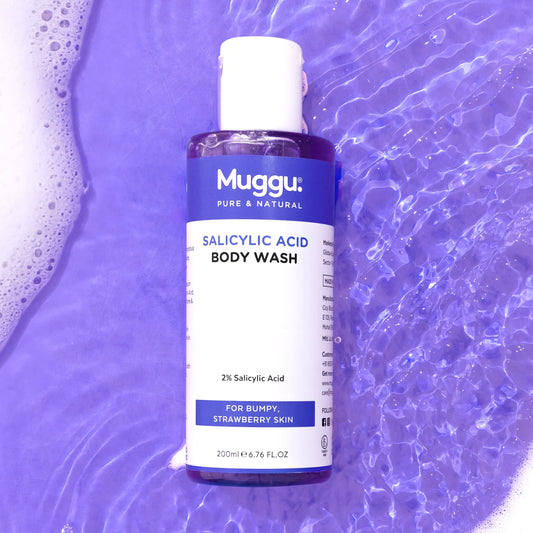
Salicylic acid is a powerful beta hydroxy acid (BHA) that penetrates deep into the pores to dissolve excess oil, dead skin, and buildup ,making it one of the most effective solutions for active body breakouts.
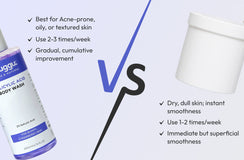
It not only unclogs pores but also has anti-inflammatory properties that calm redness and reduce swelling. Because it helps regulate excess sebum, salicylic acid is perfect for oily or acne-prone skin, especially on the back and shoulders where oil glands are more active.
A 2% concentration is considered ideal for body care, offering strong acne-fighting benefits without overwhelming the skin. If your breakouts are triggered by sweat, humid weather, or friction from tight clothing (like backpacks or sports bras), salicylic acid can help both treat and prevent future acne from forming, making it a go-to ingredient for gym lovers and anyone dealing with persistent body acne.
How Glycolic Acid Works for Body Acne
Glycolic acid is an alpha hydroxy acid (AHA) derived from sugarcane, known for having the smallest molecule size in its category. This allows it to absorb efficiently into the skin and accelerate cell turnover, making it a powerful resurfacing ingredient.
It works primarily on the skin’s surface to smooth rough, bumpy texture, fade dark spots and acne marks, and boost overall radiance and evenness. Glycolic acid is especially helpful for concerns like dull skin, post-acne pigmentation, and persistent rough patches on areas such as the arms, legs, and buttocks.
For body care, 5–10% is ideal for beginners, while 10–15% offers more intensive resurfacing for noticeable results. If your main struggle is the look and feel of your skin rather than active pimples, including Keratosis Pilaris (chicken skin) or ingrown bumps. Glycolic acid is the exfoliant to count on for smoother, clearer, and more even-toned skin.
Which Is Better for Body Acne?
The best acid depends on your skin concern:
|
Skin Concern
|
Better Ingredient
|
|
Active breakouts
|
⭐ Salicylic Acid
|
|
Clogged pores & sweaty back acne
|
⭐ Salicylic Acid
|
|
Rough texture + dark spots
|
⭐ Glycolic Acid
|
|
Keratosis Pilaris (bumpy arms)
|
⭐ Glycolic Acid
|
|
Oil control
|
⭐ Salicylic Acid
|
|
Sensitive skin
|
Tie
both work in lower strengths
|
Can You Use Both Together?
Yes! Many dermatologists actually encourage using salicylic acid and glycolic acid together for the most complete body acne routine but the key is not to introduce them at the same time if you’re new to acids.
The safest method is to alternate them: use a salicylic acid body wash in the morning to clear pores and prevent new breakouts, and apply a glycolic acid lotion or toner at night to smooth skin and fade dark marks. Start with 2–3 times a week, then slowly increase frequency as your skin adjusts.
Always follow with a moisturizer to prevent dryness, and avoid applying acids on freshly shaved skin to minimize irritation. Since exfoliating acids can increase sun sensitivity, make sure to use sunscreen on exposed areas during the day. If your skin becomes overly dry, tight, or stingy, simply cut back on usage and reintroduce each acid gradually until your skin feels comfortable again.
Conclusion
If you’re battling ongoing, inflamed acne, choose Salicylic Acid. If your struggle is dark marks and rough texture, pick Glycolic Acid.
And if you want the most effective acne + scar + texture solution?
👉 Use both — alternating days — for clear, smooth, even-toned skin.
Exfoliating acids can truly transform body skin when used consistently and gently. Pair them with simple habits like showering after workouts, breathable clothing, and a good moisturizer and you’ll notice the difference in a few weeks.